

| Chapter : | Introduction |


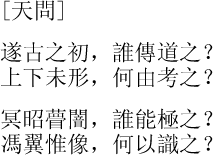
relationship, natural phenomena, historical events, and dynastic evolution. Displaying a spirit of nonconformism and skepticism, the Tian wen challenges orthodox cosmology with a fusillade of daring questions:
Who was there to tell and transmit it?
High and low all was shapeless,
By what means was it examined?
Who could have probed them?
Permeating was the Image;
How could it be recognized?5
The mystery surrounding the origin of the Tian wen remains unsolved. In an attempt to explain the unconventional form and content of this poem, the Eastern Han scholar Wang Yi (fl. ca. 107-144)-the earliest researcher and editor of the Chu ci-hypothesized that Qu Yuan wandered through wilderness during his banishment, resting in the ancestral halls of the nobility and in the temples wherein ancient kings were worshipped. The murals of myths and legends therein inspired him to write on the walls to vent his indignation about the political darkness of the kingdom while finding relief for his sorrows. As Wang wrote, “Qu Yuan looked up to view the murals and then wrote poems on the walls.”6 Qu Yuan's writings at those places were later collected and compiled into the Tian wen by his fellow countrymen. Wang Yi's hypothesis, though a subject of scholarly dispute, may be validated by mounting archeological evidence on the existence of temple murals in the Chu region in Qu Yuan's time.7 If this theory ultimately proves valid, the Tian wen may be considered the earliest prototype of tihuashi. This poem goes beyond the