

| Chapter 1: | Portraits and Portraiture |

|

|
with academic women in New Zealand and internationally. Furthermore, each had a degree of independence that enabled her to travel and enhanced her professional standing. The expansion of higher education for women in the antipodes and the consequent academic job opportunities in a new university on the margins of the British Empire seems to have offered sufficient incentives to attract women such as Boys-Smith, Rawson, and Strong from the United Kingdom and North America to Dunedin during the first two decades of the twentieth century. Over the following thirty years, similar incentives encouraged New Zealand–born graduates such as Gregory, Todhunter, and Landreth to pursue postgraduate and career opportunities in home science in the United States and the United Kingdom.76 These are the portraits that highlight the professional world of the first generations of women home scientists.
FIGURE 1.1 Professors (1930).
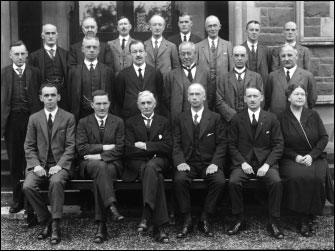
Source. Courtesy of Hocken Collections, Uare Taoka o Hakena, University of Otago, SO7-518a.