
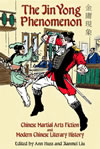

| Chapter : | Introduction |


This is a limited free preview of this book. Please buy full access.
A closer look at the wuxia project of this seasoned politician, businessman, and master of the literary jianghu, will lead us toward a greater understanding of the complexity of the concepts of nation, globalization, and diaspora.
An Anti-Europeanized Chinese Writing
Emerging in the postwar Hong Kong Chinese community in the 1950s, Jin Yong’s writing traveled beyond its given place and greatly influenced Chinese around the world. By basing his works on the genre of martial arts novels, Jin has successfully inherited the native literary tradition, long ago expelled by mainstream literature in modern China. Ever since the May Fourth new literature movement, the native literary tradition has been labeled as backward, obsolete, and reactionary because of its inability to keep up with rapid modernization and its reluctance to acknowledge the new vernacular, baihua. However, increasingly scholars have begun to notice the intricate relationship between the native literary tradition and Chinese modernity. In his book Fin-de-Siècle Splendor: Repressed Modernities of Late Qing Fiction, 1848 - 1911, David Der-wei Wang draws our attention to the native literary tradition in late Qing novels, which in his opinion has the capacity to generate its own literary modernity in response to foreign influence, but was repressed or downgraded by modern literary history. He argues: