
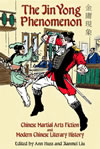

| Chapter : | Introduction |


In 1994, he was nominated by a group of serious Mainland Chinese critics as a twentieth-century Chinese literary master, fourth only to Lu Xun, Shen Congwen, and Ba Jin; Beijing University presented him with an honorary professorship that same year, and several international conferences focusing on Jin Yong’s novels have since been conducted in Mainland China, Hong Kong, Taiwan, and the United States.
This “Jin Yong phenomenon,” however, is not without its critics. The complex politics that surround the funding of academic conferences and the Nobel Prize, as well as concepts of identity, both personal and professional, that remain inextricably linked to geography, national pride and politics, diaspora cosmopolitanism, and the provincialism of writers such as the much-acclaimed “hoodlum” author Wang Shuo all contribute to our understanding of Jin Yong, his writing, and the martial arts novel as a genre. Scholars around the globe often assume that it is impossible to discuss the writing of Jin Yong without making a political statement about the future of Hong Kong, the efficacy of the Nobel Prize competition, and one’s own personal political leanings. However, the editors and the contributors of this collection beg to differ. As academics, while we note the inextricable importance of politics—national, academic, and personal—to Chinese literary history, we have tried not to allow such politics delay our scholarly purpose: a long overdue, detailed investigation of a genre that has captured the hearts and minds of Chinese around the world for generations, a genre that forces to the surface like no other genre can the complex relationship between mainstream modern Chinese literature and uncanonized popular cultural production.
Has Jin Yong invested his own funds to bring attention to his work? Yes. Has he used his own newspaper, Mingbao, as a medium for further discussion of his political views? Yes. Has he been intimately involved in Mainland–Hong Kong politics for decades? Yes. Has he personally launched a clandestine campaign to wrest the Nobel Prize from European hands? This is a silly question and one that cannot determine the boundaries of our investigation of his oeuvre. The question of the Nobel Prize, and indeed all literary prizes, is from many perspectives a political one and not the object of our inquiry in this collection.