
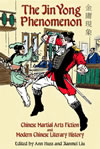

| Chapter : | Introduction |


This is a limited free preview of this book. Please buy full access.
The research presented in this book, as mentioned earlier, bridges mainstream modern Chinese literature and uncanonized popular cultural production via close, scholarly readings of important literary texts. The scholars who have contributed to The Jin Yong Phenomenon represent the worlds of classical and modern Chinese literary thought and hail from China and the United States. All are keenly aware of the importance of positioning the study of Jin Yong’s novels within the larger scope of twentieth-century literature and culture, in stark contrast to past scholarly attempts to limit research on Jin’s wuxia project to the much-denigrated genre of the martial arts novel. It is only from this vantage point that important theoretical issues such as modernity, gender, nationalism, East–West conflicts, and high literature as opposed to low culture, can be seriously reconsidered.
Most scholars of modern Chinese literature have studied Jin Yong’s novels within the boundaries of “martial art novels,” an approach which to a large degree has not only ignored the position of Jin Yong’s writing in the modern Chinese literary tradition, but also disregarded the impact of specific historical circumstances on the production of literary works. To remedy this weakness, our selection considers Jin Yong’s anti-Europeanized Chinese writings as works which efficiently rejuvenate long-neglected elements of the native literary tradition: huaben xiaoshuo, classical essay language, and the style of the Mandarin Duck and Butterfly School (Yuanyang hudie pai), all suppressed long ago by the New Literary Tradition. In addition to reclaiming the importance of Jin Yong’s language, our collection also engages Hong Kong, and the cultural and geopolitical space within which Jin Yong’s writings were produced from the 1950s through the 1970s. In this way, we go beyond the limits of literature, ushering the research of Jin Yong’s novels into the interdisciplinary world of political, social, cultural, and film studies. We believe that the popularity of Jin Yong’s works offers us an opportunity to reconceptualize the relationship between high and popular culture, the canon and the uncanon, the modern and the traditional, the East and the West.