
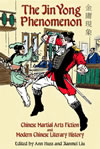


It is familiar in its invocation of the cultural memory of a marginalized martial arts tradition and Confucian morality. It looks strange in its freshness and plebian aura. In fact, the language of a Jin Yong novel comes as a fresh breeze that blows against the stuffy Europeanized version of the Chinese language that was canonized by mainstream literature and discourse throughout the twentieth century. Moreover, this Europeanized Chinese, in its unquestioned embrace of Western modernity, fostered a tunnel vision of Chinese modernity in isolation of Chinese culture. Such a take on modernity without an inner soul has undercut itself and has impoverished the Chinese language and culture. This lack of cultural substance marks the radical revolutionary language that tried over and again to cleanse the “feudal remnants” (fengjian canyu) — remainders of traditional culture denigrated by advocates of modernity and revolution. Thus from a broad modernist perspective, the Jin Yong phenomenon marks an effort to proclaim that there is a Chinese modern culture that keeps its valuable tradition alive.
Jin Yong’s attraction lies not only in his power to challenge the established language and literary forms, but also in the fact that his work becomes a force of resistance in relation to colonialism and Western hegemony. The editors and writers of this volume, however, do not want to harp on the tired themes of resistance and domination. In the age of clashes between cultures, cultural imperialism may find its mirror image in chauvinistic nationalism. Jin Yong therefore emerges in this geopolitical landscape as an adroit player capable of taking on multiple and changeable identities. For the contributors of this volume, Jin Yong suggests a way to freedom by acting as a wandering warrior traveling through the rivers and lakes. By taking on different identities as the political situation calls for, the warrior manages to thread his or her way through power blocks of domination or victimhood, without being in league with the powers that be. This is the ancient “existentialism” of the martial arts spirit, wuxia. I believe this is a reason why students and the western audience in a liberal society are drawn to this free-floating ethos.