
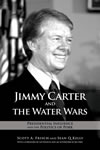


An initial administration “hit list” of water projects became public in early 1977, and it caused an uproar on Capitol Hill. Those of us on the White House congressional liaison staff worked hard to contain the damage, while at the same time working to preserve the president’s role in setting federal spending priorities and parameters.
Only a last-minute deal between the president and the then House Speaker Thomas P. “Tip” O’Neill prevented the legislative stalemate from becoming Carter’s first veto. With the advantage of hindsight, those of us on the White House staff who breathed a sigh of relief when the compromise was struck—who were trying to keep relations between the two branches as smooth as possible—were probably wrong. It probably would have been better to have what turned out to be the inevitable fight right then and there.
By mid-1978, Jimmy Carter’s standing with the public, and among Members of Congress, was ebbing. Of political erosion, the one that takes place on Capitol Hill can be the most damaging because it cuts directly into a president’s ability to govern. Faced with that reality, several members of the White House staff hammered out a “veto strategy” as one way to reassert the president’s political viability and leadership authority. Two major pieces of legislation—the Military Authorization Bill and the 1978 version of the Public Works Appropriations Bill—were identified as likely veto targets.
In fact, the president ended up vetoing both bills, and his vetoes were sustained after enormous political efforts designed and orchestrated by the White House. Extensive research by professors Frisch and Kelly, as presented in this book, examines in detail and reveals for the first time, in a comprehensive way, what went into the public works fight, which was in many ways the toughest of the two.